

Chart Your Character’s Origin Story, Before the Plot Begins
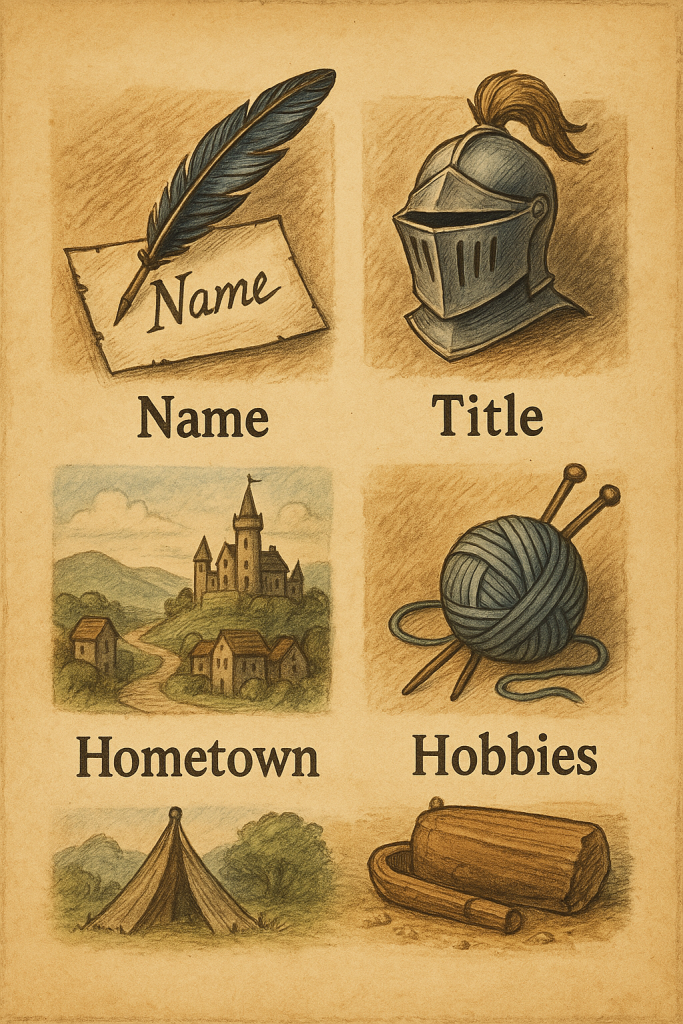
Before you get into creating dazzling hair flips and emotionally loaded eye rolls, it’s time to focus on the character building basics. What truly makes your character unforgettable? That means starting with the foundation: their name, background, hometown, and role in the world you’re creating. Without these essential traits, your character’s actions won’t ring true. You’re just drawing a silhouette.
Here’s how to build that foundation so your characters aren’t just cool on the outside, but compelling all the way through.
1. Who Is Your Character, Really?
Full Name and Nickname
Names do more than identify. They suggest heritage, tone, or even fate. A grim warlord named “Buddy” raises questions. So does a shy librarian named “Rex.”
Pro Tip: Use names and nicknames to contrast expectations or deepen backstory. Sometimes what seems odd is exactly what makes a name unforgettable.
Fun Fact: Charles Dickens often gave his characters names that mirrored their personalities, like the cold-hearted Ebenezer Scrooge or the slimy Uriah Heep.
Title
Titles establish hierarchy, respect, or irony. Whether it’s “Dr.,” “Agent,” or “Baroness of the Basement,” titles influence how others perceive the character and how the character sees themselves.
Social Status
Social standing affects goals, speech, habits, and how characters handle conflict. Knowing where your character stands in society (and how they feel about it) offers an easy route to built-in tension and motivation.
Fun Fact: In 17th-century France, aristocrats carried fans not just as accessories but to signal status and flirtation through coded gestures.
Sex and Gender
This influences voice, relationships, and cultural expectations. Whether your character embraces or defies gender norms, their identity should feel integrated into their story.
Character Type
Are they a hero, a trickster, a loyal sidekick? Do they challenge those expectations? Writing a comic-relief character with hidden depth or a villain with virtue can elevate your narrative.
Development Arc
Is your character someone who transforms—or someone who resists change? Dynamic arcs (like Zuko’s in Avatar) pull readers in, while static characters (like Sherlock Holmes) offer stability and contrast.
Fun Fact: Shakespeare’s characters often followed clear arcs, Macbeth’s descent into tyranny, for example, showing how internal change drives tragedy.
Story Role
Understanding your character’s function—mentor, obstacle, chosen one—keeps your story on track. Even a background character needs a reason to be there.
Character Archetype
Familiar roles like The Hero, The Outlaw, or The Caregiver can ground your character’s design. Twist them to surprise your audience: a rebellious princess, a cowardly knight, or a gentle villain.
Hobbies and Interests
Give your characters unexpected passions to make them feel real. These quirks humanize them and open up new layers of behavior and conversation.
Fun Fact: Agatha Christie, queen of murder mysteries, loved surfing and archaeology. Imagine Miss Marple with a wetsuit.
2. Where Do They Come From?
Before your characters start flipping their hair or delivering eye rolls loaded with meaning (we cover that in our physical traits guide), it’s time to focus on the real foundation: who they are and where they come from. Characters grow from their environments. Birthplaces, languages, and current surroundings all contribute to your character’s voice, values, and worldview.
Birthplace and Cultural Background
Location impacts everything: belief systems, behaviors, fears. A character raised in a utopia will see conflict differently than someone raised in a crumbling empire.
Fun Fact: In 19th-century Iceland, people used patronymics instead of surnames, meaning your last name was literally “your father’s name + son/daughter.” No Smiths or Joneses here.
Native Language and Accent
How your character speaks reveals class, region, and background. Accents and idioms aren’t just decoration—they can reinforce (or undermine) how others perceive the character.
Fun Fact: The English accent associated with villains in Hollywood isn’t accidental. It stems from mid-century casting norms that associated British tones with intelligence and menace.
Current Residence
Where your character lives now shows how far they’ve come or how far they still want to go. Their space should reflect personality, priorities, or even contradictions.
Fun Fact: When J.R.R. Tolkien created Bag End for Bilbo Baggins, he based it on his own fond memories of quiet English countryside homes—comfort built into character design.
Bringing It All Together
When a character’s internal traits align with their external world, everything clicks. They stop being a story device and start feeling like someone who’s lived a life before page one—and might keep living it after the last chapter ends.
Need help building a character from scratch?
Download our Free Character Sketch Template for a step-by-step guide that covers traits, backstory, motivations, and more.
Final Thoughts: Characters Built to Last
So what’s in a name or a hometown?
Everything.
When you build from the ground up, with layered details, grounded traits, and a believable environment, your character stops being fiction. These character-building basics become unforgettable. Someone your reader believes in. Someone they’ll follow anywhere.
Who’s the most complex, quirky, or layered character you’ve ever written? Think your villain is just “evil for evil’s sake”? Time to rethink that. 👑 Learn why values matter more than you think when building memorable villains.
The secret to memorable scenes? Not big plot twists—small details. Learn how habits, rituals, and sensory writing can transform your storytelling. How Tiny Details Make Scenes Unforgettable
Write your book with us
Join the Write Your Books community on Skool. It is free to join, and you get step-by-step help, weekly prompts and other writers cheering you on.
