
5 Physical Traits That Reveal Character Emotion
Show, don’t tell —we hear it all the time. But when your character’s lips tremble or their fingers twitch, you’re doing more than showing. You’re translating invisible emotion into visible action. That’s the power of physical traits that reveal character emotion.
Writers often obsess over what characters say or think, but it’s the unspoken—the physical tics, postures, and twitches—that truly bring them to life. Think of these physical traits as emotional subtitles: subtle, visual cues that whisper to readers what your character may not yet know themselves. From shifty eyes to clenched fists, a character’s body is a loudspeaker for their feelings, and it’s time we cranked the volume. These small, believable gestures allow readers to feel the tension, fear, or joy bubbling beneath the surface, without a word of dialogue.
So if your characters have been saying how they feel a little too much, it might be time to let their bodies speak instead. Here are five physical traits that can do the heavy lifting for emotional depth.
1. Eyes: The First to Speak
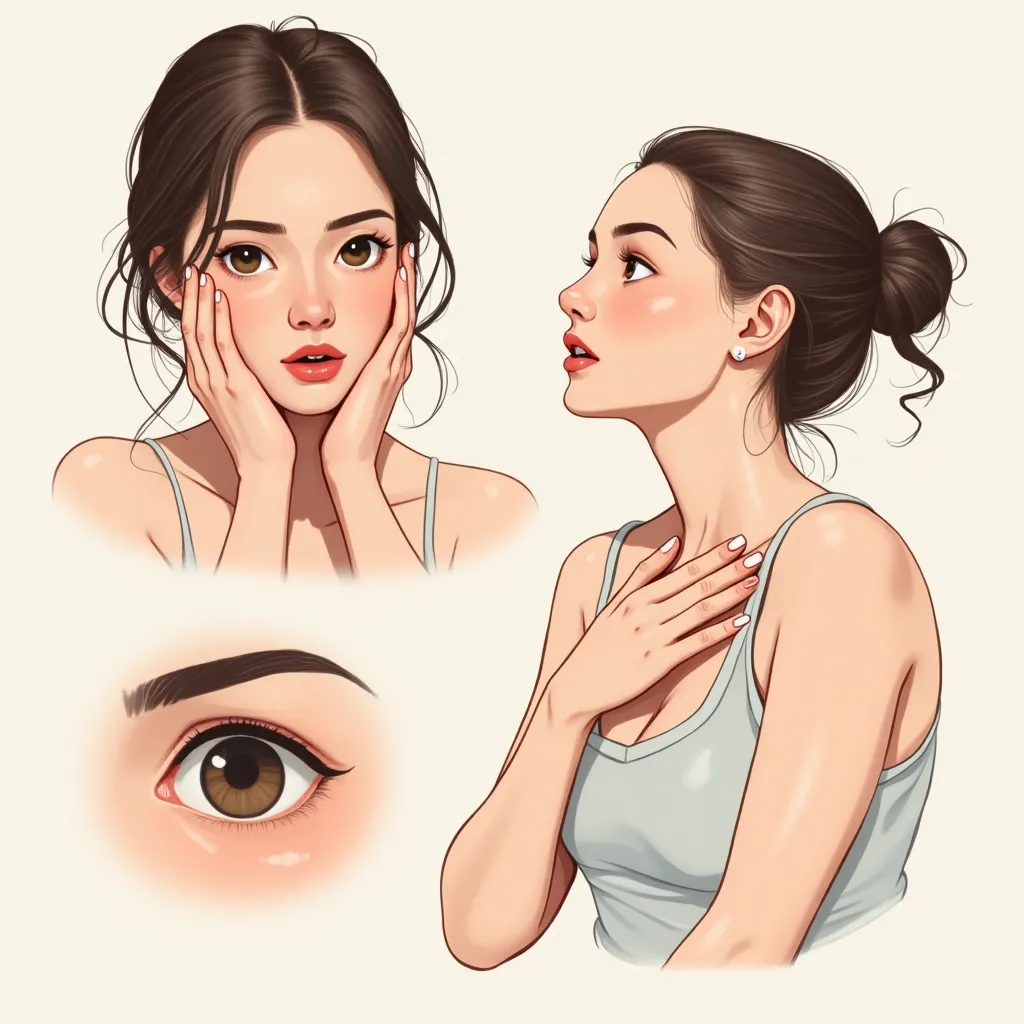
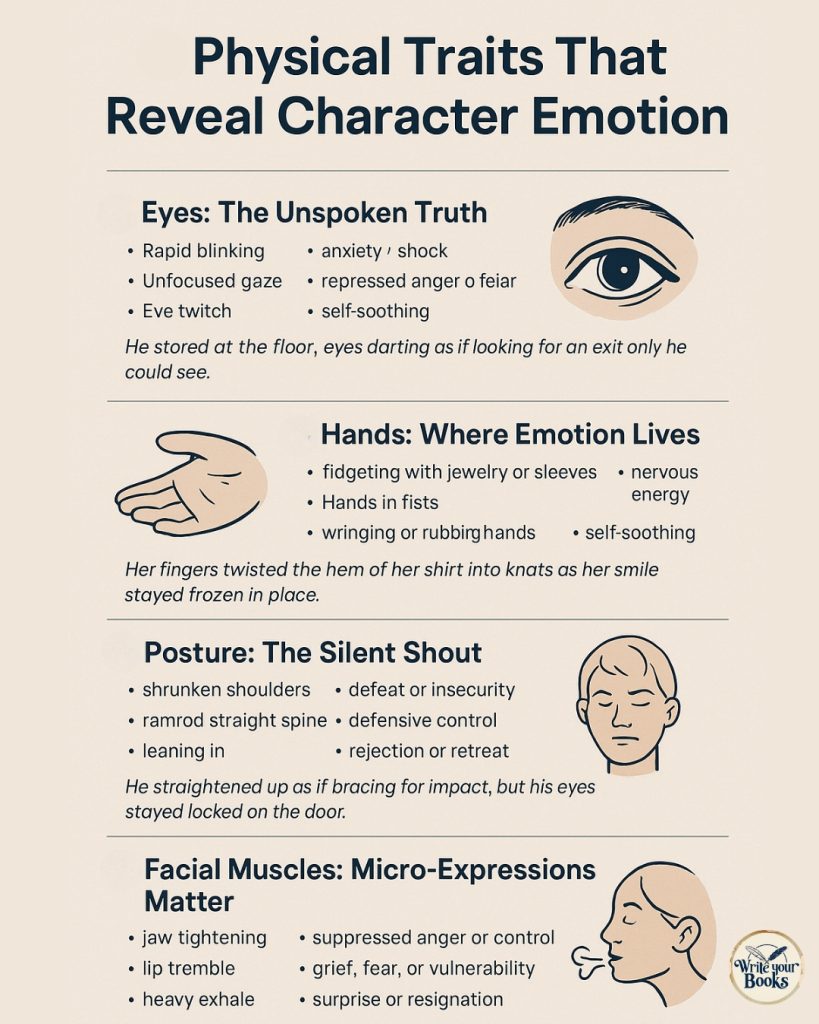
Eyes are windows to the soul for a reason. They are your character’s emotional loudspeakers. Wide eyes can convey shock, fear, or wonder. A downward glance may hint at shame, submission, or shyness. Rapid blinking? Nervousness or overwhelm. Darting eyes can betray a lie or reveal a search for an escape route.
When writing eyes, go beyond color. Think movement, moisture, and focus:
Example: “Her eyes darted toward the door before settling on the floor, too restless to lie but too frightened to confess.”
Use eyes to hint at secrets, resistance, or deep longing. They’re often the first giveaway that a character isn’t saying what they really mean.
Pro tip: Combine eye movement with changes in lighting or reflection for deeper symbolism.
Read more: How to Write Eyes That Speak Volumes
2. Hands: The Truth-Tellers
Hands betray what mouths conceal. Think of someone wringing their hands, drumming their fingers, or white-knuckling a steering wheel. Even the most composed character can be undone by a trembling pinky.
Hands are versatile tools for emotion:
- Fists = anger or restraint
- Open palms = vulnerability
- Fidgeting = discomfort, anxiety, excitement
Example: “He twisted his wedding ring until the skin beneath turned red—his words calm, but his fingers trembling with conflict.”
Let the hands speak when the dialogue lies. Using hands can be especially powerful during silent moments, like a goodbye scene or a character hearing bad news. It’s a simple way to layer truth beneath a mask.
3. Posture: The Emotional Post-it Note
Posture tells us everything: whether a character owns the room or wishes the floor would swallow them up. Someone who stands tall with squared shoulders exudes confidence (or is trying to fake it). A slumped figure with hunched shoulders is weighed down by sorrow, shame, or even exhaustion.
Subtle shifts say a lot:
- Leaning forward = interest or aggression
- Shrinking inward = avoidance or fear
- Rigid and upright = formality, tension, or defensiveness
Example: “She curled into the armchair like it was armor, knees tucked, spine curved, voice barely above a whisper.”
Posture can change dynamically, showing the rise or fall of emotional states without a single word. Even subtle changes in how a character sits or stands can shift the emotional tone of a scene.
4. Facial Muscles: Micro-Expressions Matter
The face is a playground of subtlety. It’s where a single twitch or wrinkle can betray everything. A clenched jaw, flared nostrils, quivering lips—these tiny shifts carry enormous weight.
Even when a character tries to keep a straight face, the body often betrays them:
- Raised brows = disbelief or concern
- Lip biting = nervousness or self-restraint
- Jaw tightening = repressed anger or control
Example: “Her smile was tight, her cheeks stiff, but the twitch at the corner of her eye gave her away.”
These nuances are perfect physical traits that reveal emotion in showing characters that try to maintain composure while inner turmoil brews.
Facial expressions work best in high-stakes moments, where emotional tension is high and words might fail. Explore more expert writing tips on character face descriptions to make your protagonists and antagonists leap off the page
5. Breathing: The Rhythm of Emotion
You might not think of breathing as physical storytelling, but it is. How your character breathes is often how they feel. Rapid, shallow breaths signal panic or excitement. Slow, deep breathing may show calmness—or the attempt to be calm. Breath held? That’s suspense, fear, or hesitation waiting to burst.
Breathing builds tension and rhythm:
- Sighing = release, regret, or exasperation
- Holding breath = anticipation or dread
- Sharp inhales = surprise or shock
Example: “He held his breath as the silence stretched, each second grinding against his ribs like clockwork.”
Breathing makes internal emotion physical, instantly connecting readers to what’s felt but unsaid.
Final Thoughts: Small Traits, Big Impact
Physical traits reveal emotion and let your characters speak volumes, without a single word. It’s more than body language in writing. It’s emotional subtext made visible. The trick is to use these gestures with intent, not overload. A single twitch, blink, or sigh at the right moment can hit harder than a full monologue.
So next time your character’s feeling something, let their body do the talking. Make their eyes well up, their hands tremble, their breath catch. Write the truth of their emotions in the spaces between their words. Readers will hear it loud and clear.
Want more tips?
📌 Explore: Master dialogue and character voice in fiction
📚 Read: Subtext in Dialogue – When You Say Nothing At All
Write your book with us
Join the Write Your Books community on Skool. It is free to join, and you get step-by-step help, weekly prompts and other writers cheering you on.
