
Describing Skin in Stories That Span Worlds and Eras
When you’re writing characters, skin can be just as important as eyes or gestures. Skin reflects history, emotion, and identity, and learning how to describe skin in different genre storytelling helps you connect characters more deeply to their world. Whether it’s the shimmer of a fantasy hero, the warmth of a romantic moment, or the weathered look of a historical figure, skin brings your cast to life.
Skin may be the largest organ of the human body, but in storytelling, it’s also one of the most overlooked details. Writers often stop at “she had fair skin” or “his skin was dark,” but that leaves so much possibility untapped. The way you describe skin can set the tone for romance, deepen the worldbuilding of fantasy, or anchor a reader in the authenticity of historical fiction.
Why Skin Details Matter
Skin reflects more than looks. It also it reveals identity and backstory. A scar hints at past battles. A burn might whisper of survival. Flushed cheeks can betray excitement, shame, or attraction. In writing, skin can become a storytelling tool, not just a decorative detail. Readers might not consciously notice every description, but they’ll feel the impact of a world populated with believable people.
For example, just as writers focus on sensory details to transform character, skin offers a different way to show a character’s journey.
Skin in Different Genre Writing
Each genre frames skin details differently. By tailoring how you describe skin in different genre contexts, you not only enrich characters but also reinforce the atmosphere of your story.
In Fantasy: Skin as Symbol and Storytelling Device
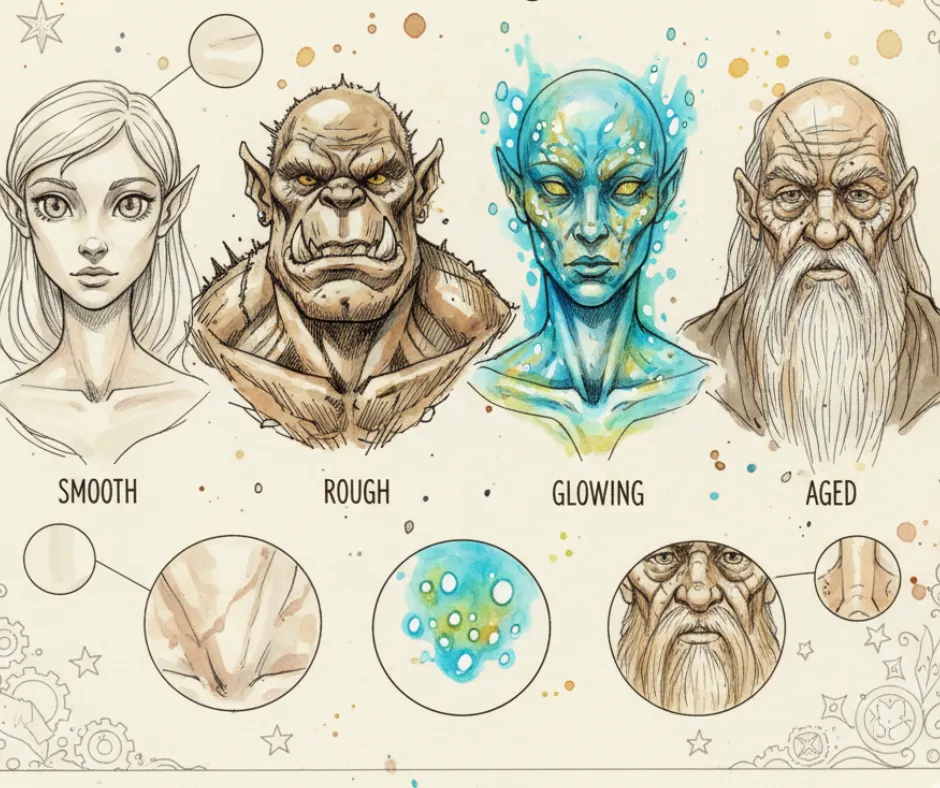
Fantasy thrives on the extraordinary. Your characters’ skin can reflect culture, magic, or entire realms. Elven characters might shimmer with ethereal radiance, while orcs might bear rough, weathered skin that mirrors their harsh lives. In fantasy, describing skin in fiction often carry magical or symbolic meaning.
- Unusual tones: Think of Tolkien’s dwarves with weathered, earth-toned complexions, or characters in your world with skin like shimmering quartz, storm-cloud gray, or mossy green.
- Marks of magic: Runes that glow beneath the skin, veins that shimmer with silver, skin that bruises when sorcery is used.
- World-specific effects: Living underground might give a population translucent skin; desert dwellers may have leathery, windburned faces.
Example:
Her skin carried the faint blue tint of moonlight, as if the goddess herself had pressed her fingertips into her veins. Each time she whispered a spell, silver motes glowed beneath the surface.
In Romance: Skin as Intimacy and Sensation
Romance is rooted in how characters feel about one another, and skin description is one of the most sensual tools you can use. Here, writing skin across genres becomes intimate, helping to show chemistry and vulnerability.
- Textures matter: Smooth, soft, scarred, rough—touch conveys emotion more powerfully than sight alone.
- Reactions: Goosebumps at a lover’s whisper, flushed cheeks under a gaze, heat rising at the brush of fingers.
- Specificity in intimacy: The story of freckles, laugh lines, or stretch marks isn’t just surface detail—it’s tenderness, proof of a lived body.
Example:
When his fingertips brushed her wrist, her skin prickled with a thousand tiny fires, betraying her calm smile with every racing heartbeat beneath the surface.
In Historical Fiction: Skin as Authenticity and Atmosphere
Historical fiction calls for detail that places a character firmly in their era. Skin often shows the marks of era and labor. Sun-darkened skin from fieldwork, powdered complexions of the aristocracy, or scars from war all ground the reader in a time and place.
- Weathering: Farmers, sailors, and soldiers often bore the sun, wind, or soot on their skin.
- Cosmetics and class: Pale, unblemished skin might signal wealth and indoor life in Victorian England, while sun-darkened complexions revealed outdoor labor.
- Disease and hardship: Pox scars, malnutrition pallor, or soot-streaked cheeks reflect not just the individual, but the history around them.
Example:
Her skin was pale, powdered to perfection, though fine cracks betrayed hours in the candlelit ballroom. Across the street, a washerwoman’s hands, reddened and raw, told an entirely different story.
Tips for Writing Memorable Skin Details
- Be Specific – Don’t just say “he had tan skin.” Was it the deep bronze of long days under the sun? Or a light brown warmed by seaside air?
- Use Contrast – Show how skin interacts with light, setting, or emotion. Pale skin glowing in candlelight tells a different story than the same skin under harsh sunlight.
- Balance Description – A few lines can set the mood, but avoid paragraphs of cataloging every pore. Skin details should serve character, tone, or theme.
- Match the Mood – In romance, linger on warmth and sensation. In fantasy, highlight strangeness or magic. In historical fiction, focus on accuracy and cultural context.
Related Reading: Bringing Characters to Life Through Skin Details
Quick Genre Checklist
Fantasy: Does the skin reflect worldbuilding or magical influence?
Romance: Does skin description enhance intimacy and emotional resonance?
Historical: Does skin anchor the character in time, class, or circumstance?
For more inspiration, check out guides on character description at Reedsy or Now Novel.
Final Thoughts
Skin may be ordinary, but it carries extraordinary narrative weight. It’s memory, culture, and emotion, wrapped in one. By thoughtfully weaving description into your writing, you create characters that feel grounded in their world. And when you focus on skin in different genre writing—whether fantasy, romance, or historical—you give readers an even deeper way to connect.
Next time you introduce someone on the page, look beyond color. Don’t just reach for hair or eyes. Ask what their skin reveals about who they are, where they’ve been, and what they’re feeling in this exact moment. Consider how skin in different genre writing can transform your story from surface-level to unforgettable.
Write your book with us
Join the Write Your Books community on Skool. It is free to join, and you get step-by-step help, weekly prompts and other writers cheering you on.
