
Tying Up Loose Ends: How to Resolve Subplots with Impact
Don’t let your side stories drift. Wrap them up with purpose, clarity, and emotion. Great stories don’t just tell a main plot. They thread multiple narratives together like a master weaver. But if you don’t resolve subplots with care, readers might walk away feeling unsatisfied or confused.
You’ve crafted a compelling subplot. You’ve woven it beautifully into the scenes. But as you approach the final chapters of your novel, a new challenge emerges: How do you resolve that subplot without losing momentum or leaving readers hanging?
Subplots that fizzle out or vanish weaken your ending. Readers notice. Editors notice. But with the right techniques, your subplot resolution can elevate your ending—not distract from it.
Let’s break down how to do just that.
1. Give Your Subplot a Purposeful Arc
Even though subplots are secondary, they deserve a beginning, middle, and end. That doesn’t mean every subplot needs a dramatic finale. They should reach a moment of clarity or transformation.
Readers expect closure. When you resolve subplots with intention, each thread feels like it served a purpose, whether it changed your character, challenged their beliefs, or contrasted with the main theme.
Ask yourself:
- Has the subplot character achieved or lost something?
- Did the subplot alter the main character’s final decision?
- Has the theme explored in the subplot reached a conclusion?
Example:
In The Fault in Our Stars, Hazel and Gus’s romance subplot concludes emotionally alongside the main plot but it carries its own arc of vulnerability, love, and grief.
A resolved subplot = a fulfilled emotional promise.
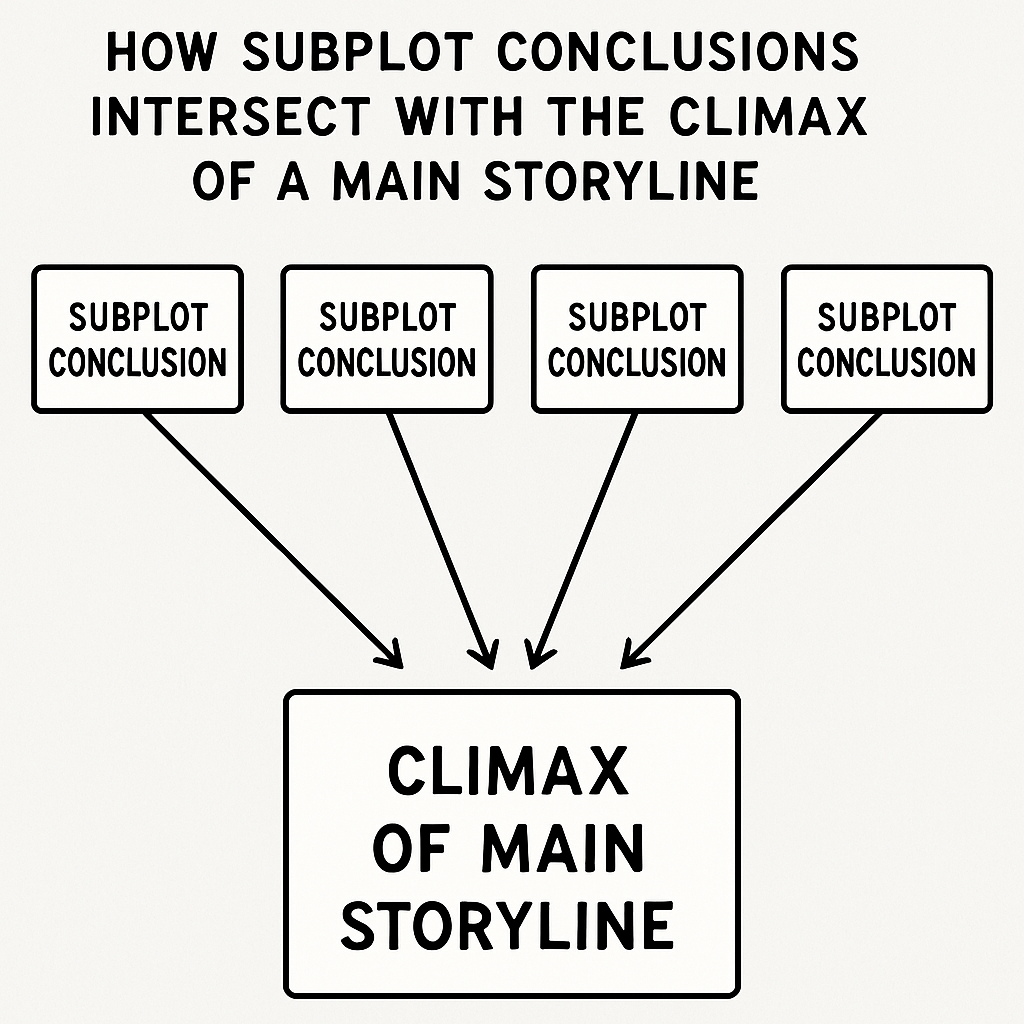
2. Let Subplots Influence the Main Plot’s Climax
Some of the most satisfying stories allow subplots to intersect with the main plot’s turning point. This makes the subplot feel essential rather than optional.
You can do this by:
- Having a subplot character provide a final clue, rescue, or insight.
- Letting the emotional weight of a subplot push the protagonist to act.
- Creating a final choice where subplot consequences affect the main conflict.
Example:
In Stranger Things, the romantic subplot between Hopper and Joyce influences their emotional stakes and risks during the main showdown, giving the climax personal depth.
Interweaving subplot consequences boosts narrative tension.
3. Resolve Subplots Before or During the Denouement
Not every subplot needs to climax during the final battle. In fact, resolving some subplots before the main climax can clean emotional space and allow your core ending to shine.
Options include:
- Resolving a relationship subplot in a quieter chapter just before the final conflict.
- Giving closure to a character’s personal arc in the denouement (after the climax).
- Hinting at off-page resolutions that feel natural, not rushed.
Example:
In Pride and Prejudice, Lydia’s elopement subplot resolves before Darcy and Elizabeth’s final emotional resolution, clearing the path for the main love story to take focus.
4. Subplots Don’t Always Need a Happy Ending
Resolution doesn’t mean a bow-tied wrap-up. Some subplots can end in loss, ambiguity, or emotional distance, as long as they feel intentional.
Think:
- The mentor who sacrifices themselves for the protagonist.
- A romantic subplot that ends in unrequited love.
- A secret revealed too late to change the outcome.
Example:
In The Hunger Games, the subplot with Katniss’s mother remains strained through the trilogy: realistic, painful, and narratively honest.
Emotional closure matters more than tidy outcomes.
5. Track Your Subplots in Revision
You may forget a subplot during drafting, but readers won’t. During revision, do a subplot pass where you:
- Highlight every scene tied to each subplot.
- Check the emotional and narrative progression.
- Ask yourself: Is this subplot necessary? Does it pay off?
If it fizzles, either:
- Cut or merge it with another plotline.
- Strengthen its midpoint and resolution.
- Clarify its role in the main character’s journey.
Pro Tip: Check out Novelry.com’s Writing Brilliant Subplot Tips and Samples here.
Final Thoughts
Resolving subplots in fiction is all about emotional and narrative satisfaction. Whether subtle or dramatic, subplot payoffs remind readers that your story was thoughtfully constructed from beginning to end.
So as you polish your final chapters, don’t leave your side stories behind—bring them home with purpose.
Bonus Download:
The Subplot Resolution Tracker – A one-page tool to help you check off subplot arcs and emotional payoffs before publishing.
Related Reading:
How to Use Subplots in Writing
Moral Compass: How Character Values Defines Your Story’s Protagonist
Write your book with us
Join the Write Your Books community on Skool. It is free to join, and you get step-by-step help, weekly prompts and other writers cheering you on.
