
The Habit Loop for Writers: Cue, Routine, Reward
Ever promise yourself you’ll “write every day”… and then watch that plan crumble faster than a stale cookie? You’re not alone. Most writers don’t fail because they lack inspiration, they fail because they haven’t built habits that make writing automatic.
That’s where the habit loop for writers comes in. Based on psychology models like Charles Duhigg’s Habit Loop and B.J. Fogg’s Tiny Habits, this method shows how to design writing rituals that actually stick —even when motivation runs low.
Let’s break it down.
The Habit Loop: A Writer’s Shortcut to Consistency
Every habit, whether it’s brushing your teeth or opening your draft file, follows the same pattern:
Cue → Routine → Reward
- Cue: The trigger that tells your brain, “It’s time to write.”
- Routine: The action itself (your writing session).
- Reward: The positive feeling that reinforces the behavior so you’ll want to do it again.
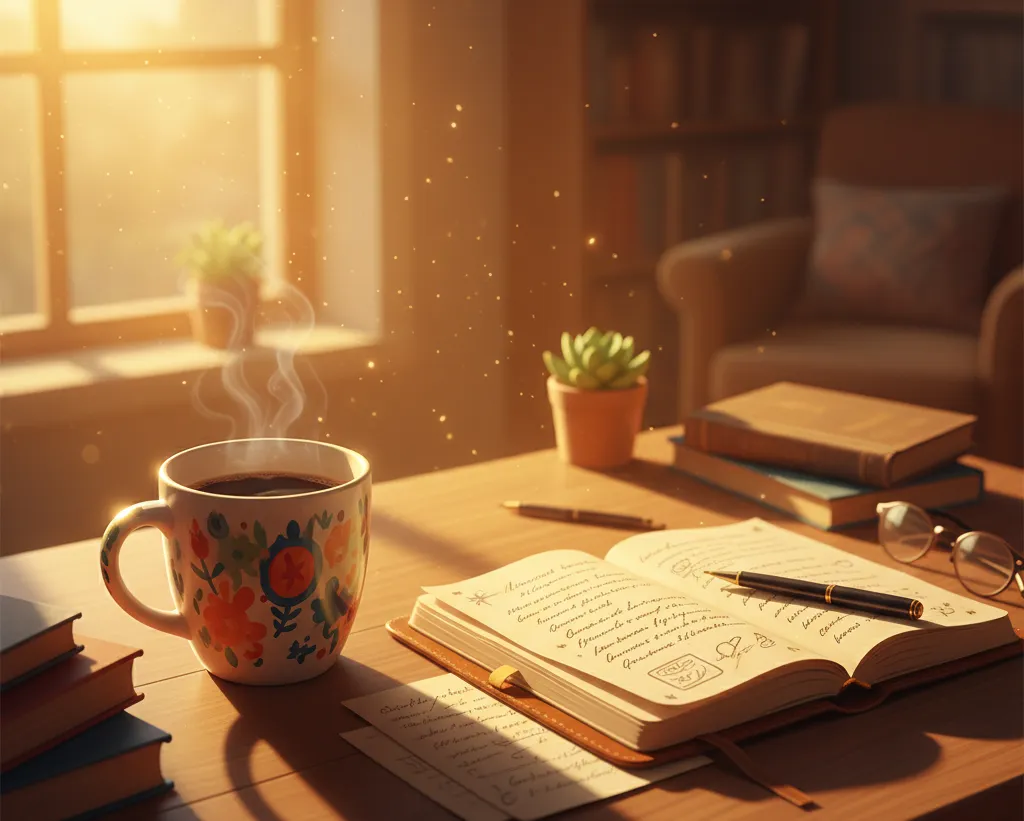
If you’ve ever brewed coffee before writing or used a specific playlist, you’re already building cues. The trick is doing it intentionally, so your brain begins to associate certain triggers with writing flow.
Step 1: Set the Cue
Your cue should be clear, repeatable, and easy to notice. Think sensory and specific:
- The scent of a particular candle or tea
- Opening your notebook or Scrivener file
- Putting on a “writing sweater”
- Hearing a morning alarm that says, “It’s time to write.”
Pro tip: Start small. Pair your writing cue with something you already do daily, like after you make coffee, open your document. That “stacking” method, borrowed from Tiny Habits, removes the friction of starting from scratch.
Step 2: Create a Simple Routine
This is the actual writing part, but the secret is to keep it achievable. A common mistake is setting goals that are too big to sustain (“I’ll write 2,000 words every day!”).
Instead, focus on the act of showing up. Write one sentence, one paragraph, one scene. If you want to go further, great. But don’t make that the rule.
Consistency matters more than intensity. Over time, your brain will start to expect and prepare for writing during your set time or place, making it easier to enter flow.
Step 3: Reward the Brain
Here’s where most writers forget to close the loop. A reward doesn’t have to be grand—it just needs to feel good enough to teach your brain, “Let’s do that again!”
Try:
- A gold star sticker (yes, even as an adult)
- Logging your word count and celebrating progress
- Reading your favorite author for 10 minutes after writing
- Saying out loud, “I wrote today.” (Tiny, but powerful.)
Your brain is wired to repeat what feels rewarding. Make sure it knows that writing = pleasure, not punishment.
When the Loop Breaks
Missed a few days? You’re not doomed. Habits are patterns. If your loop breaks, start by rebuilding the cue, not the entire system.
For example:
- If your cue was tied to mornings but life got hectic, move it to afternoons.
- If your reward stopped feeling rewarding, refresh it. Maybe replace your post-writing scroll with an outdoor walk.
Rebuilding your writing habit starts with curiosity, not guilt. Ask, “What made this harder?” Then tweak your loop to make it easier.
Suggested Reading: How Habits Work by James Clear
The Real Magic
The best part about the habit loop for writers isn’t the productivity. It’s the emotional shift. You stop waiting for inspiration and start trusting momentum. Writing becomes something you do, not something you fight yourself over.
A simple cue, a gentle routine, and a small reward, that’s the formula for a lifetime of words.
Related Reading:
- Build Deeper Characters Through Inner Practices
- Small Habits Forge Big Stories: Why Daily Rituals Matter
✏️ Try This: Mini Habit Worksheet
Download the “ Write Your Habit Loop” worksheet to map out your own cue, routine, and reward system. It’ll help you design a ritual that fits your lifestyle and creative rhythm.
Write your book with us
Join the Write Your Books community on Skool. It is free to join, and you get step-by-step help, weekly prompts and other writers cheering you on.
